Rhode Island Oil Tank Regulations For Homeowners
This page is the reference, section by section, with every citation linked. It exists because the pages ranking for this term describe a Rhode Island DEP that does not exist, an LSRP program that belongs to New Jersey, and a RIDEM contractor license the state does not issue.
Rhode Island has DEM. The regulation is 250-RICR-140-25-1.
Last reviewed August 22, 2026.
Rhode Island Oil Tank Rules At A One To Three Unit House
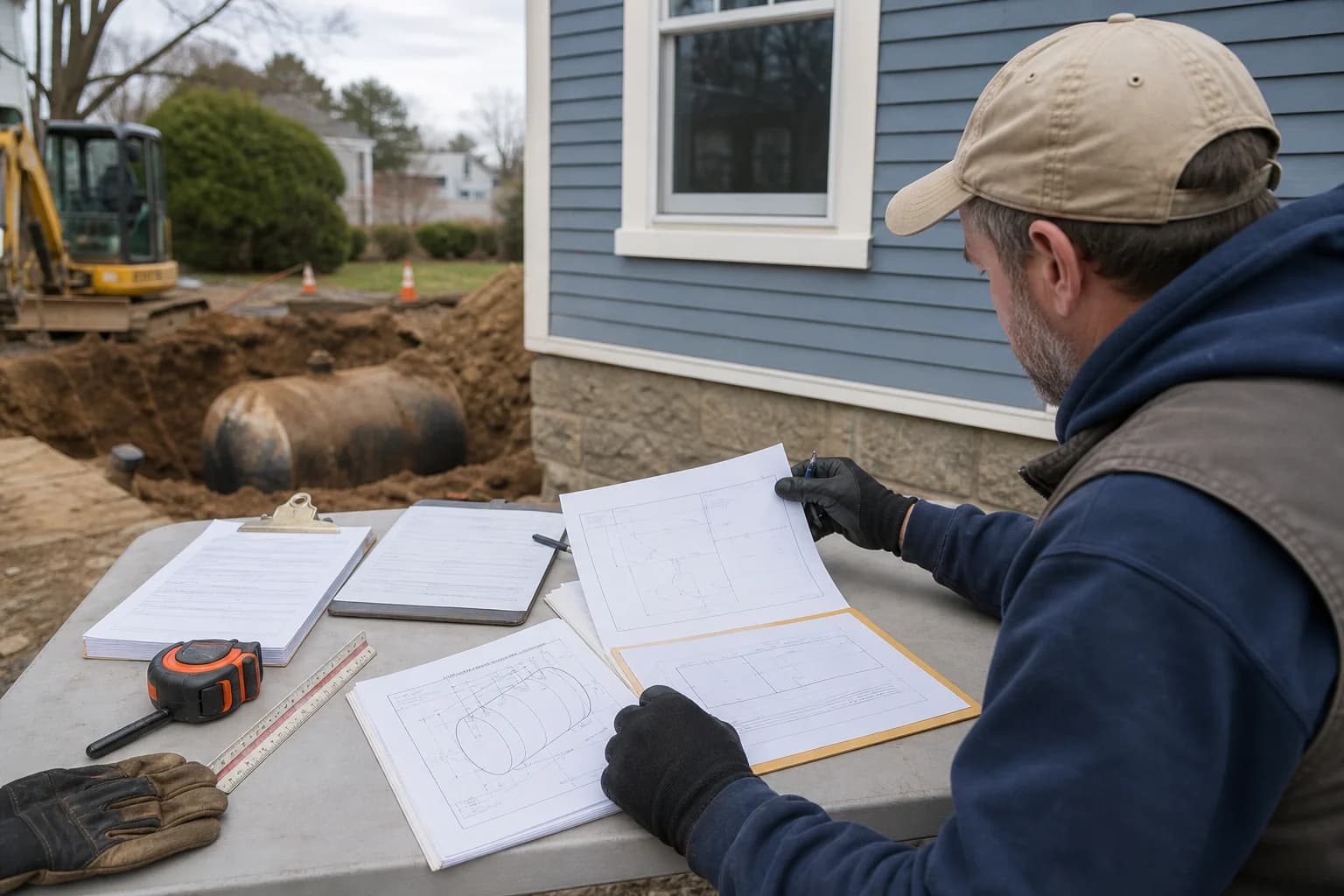
Tanks of 1,100 gallons or less holding heating oil and serving a one, two or three unit dwelling are outside the regulation, except as noted. The noted sections are 1.11(B), 1.14 and 1.15. Farm tanks of the same capacity sit alongside them.
This is the hinge the whole site turns on, and it is the reason a Rhode Island answer is never a straight yes or no.
250-RICR-140-25-1.4(E), applicability and the residential exemption. Cornell Legal Information Institute. Read August 22, 2026.
The Rhode Island Oil Tank Permit Position, Section 1.15
Abandonment of any tank or tank system is prohibited, and a tank out of service more than 180 days without approved temporary closure is considered abandoned. Removal, filling or other permanent closure needs prior approval from the Director.
Closure in place is permitted where removal would affect structural integrity, utilities or sensitive areas, and it requires product removal, capping and a concrete slurry fill.
250-RICR-140-25-1.15, closure. Cornell Legal Information Institute. Read August 22, 2026.
Section 1.15(A), The Closure Assessment Carve-Out
Two closure assessment paragraphs are disapplied for tanks storing fuel oil consumed on site solely for heating. That is the sampling step, and it is why routine soil testing is not a Rhode Island requirement on a residential removal.
The DEM instruction sheet for the closure application states the same exemption in ordinary words.
250-RICR-140-25-1.15, closure. Cornell Legal Information Institute. Read August 22, 2026.
Section 1.14, Reporting With No Exemption
All persons shall immediately report all confirmed and suspected leaks or releases. The report goes to the Director, to the appropriate local fire official, and to the local public water supplier where the property is within a watershed or wellhead protection area.
The regulation gives the DEM UST Section number as (401) 222-2797 for working hours.
250-RICR-140-25-1.14, release reporting. Cornell Legal Information Institute. Read August 22, 2026.
Section 1.11(B), New And Replacement Tanks
No person shall commence construction of a new tank system or a replacement tank system without prior written notification to and approval by the Director. The section also prohibits siting in wellhead protection areas and bare steel without corrosion protection.
It reaches a residential tank because 1.4(E) names it, so a homeowner putting a replacement back in the ground needs approval first.
250-RICR-140-25-1.11(B), new and replacement tank systems. Cornell Legal Information Institute. Read August 22, 2026.
The Registries Rhode Island Actually Operates
RIDEM certifies UST operators in Class A, Class B and Class C for regulated facilities. The Contractors' Registration and Licensing Board licenses Underground Utility, Water Filtration, Well Drilling and Pump Installers, and Rhode Island does not license general contractors.
There is no RIDEM oil tank removal license. Ask a contractor for CRLB registration and evidence of insurance, and check the closure application names them.
Rhode Island Contractors' Registration and Licensing Board. State of Rhode Island. Read August 22, 2026.
The Disclosure Statute When The House Sells
The mandatory seller disclosure form names underground tanks inside the heating system item, and the disclosure goes to the buyer no later than before signing any agreement to transfer real estate.
Failing to provide it does not void the agreement and does not create a defect in title. It carries a civil penalty of $100 per occurrence.
RIGL 5-20.8-5(b), penalty for a missing disclosure. Rhode Island General Laws, via Justia. Read August 22, 2026. Read at a 2005 codification. Confirm the penalty figure against a current codification before relying on it.
The Fuel Law That Changed In 2025
RIGL 23-23.7-4 has required No. 2 distillate heating oil sold in Rhode Island to meet a B20 standard since July 1, 2025, rising to B50 by July 1, 2030, unless suspended under section 23-23.7-7.
The earlier steps were B5 in 2021 and B10 in 2023, so the blend in a Rhode Island tank has moved four times in five years.
RIGL 23-23.7-4, heating oil biobased product content. Rhode Island General Laws, via FindLaw. Source states current through January 1, 2026.
Rhode Island Regulation Questions
Is it RIDEM or RIDEP?
RIDEM. Rhode Island's environmental agency is the Department of Environmental Management. The DEP naming appears on several sites currently ranking for Rhode Island oil tank searches, including one built on an exact-match Providence domain, and it is a reliable sign the page was not written from the regulation.
Does Rhode Island have an LSRP program like New Jersey?
No. The Licensed Site Remediation Professional program is New Jersey's. A Rhode Island page offering LSRP oversight is describing a credential that does not exist in this state.
Do I need a Rhode Island permit to remove an oil tank?
For an underground tank the document is a permanent closure application to DEM, at $75 per tank plus $75 for an unregistered tank, submitted at least ten business days ahead and signed by an authorized agent of your local fire department. It is a state application rather than a municipal permit, which is why Providence itself publishes no tank permit.
A Straight Answer On Your Tank
Send what you know about the tank and we will tell you which of these sections reach it, before anything is quoted.